

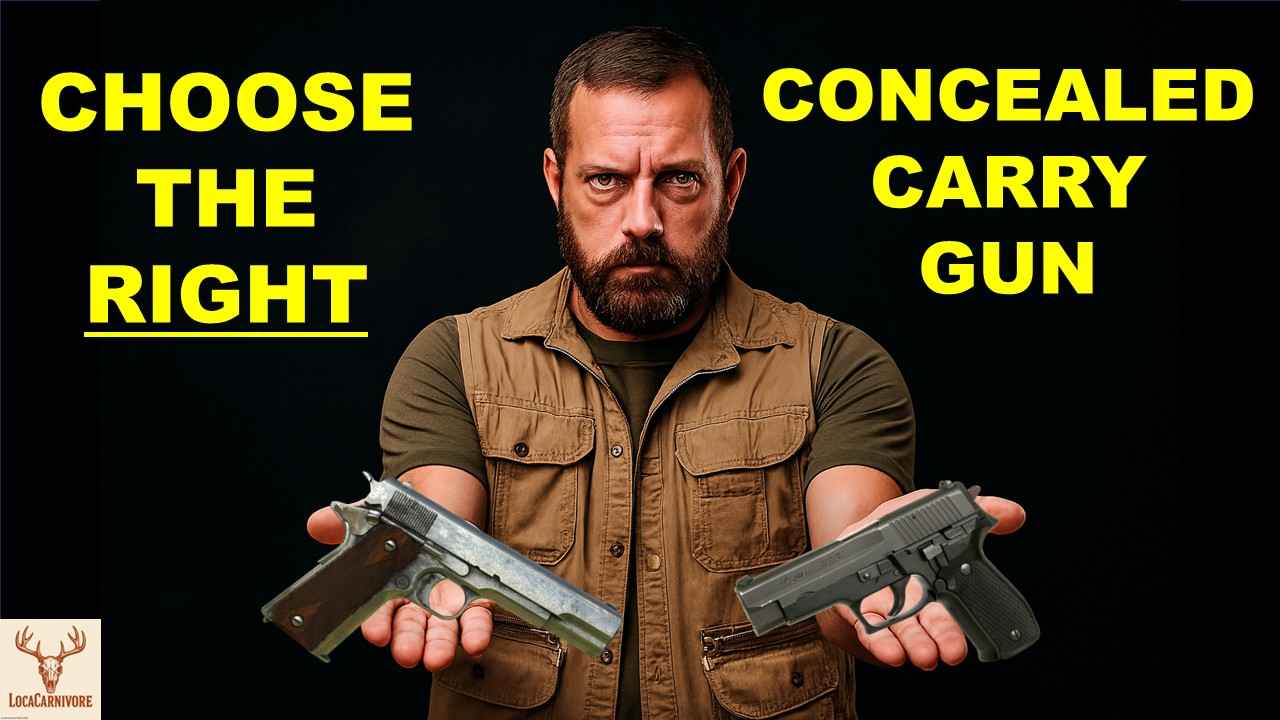
How to Select a Concealed Carry Gun
Carrying a concealed firearm is a serious responsibility. The gun you choose becomes part of your daily life, and the decision should be guided by practical considerations rather than hype or brand loyalty. While there’s no universal “best” concealed carry gun, there are clear criteria that can help you make a smart, defensible choice.
1. Reliability Comes First
A concealed carry gun is a tool of last resort. If it fails when you need it, the consequences could be catastrophic. Reliability is the single most important factor.
- Choose a firearm with a proven track record from reputable manufacturers (Glock, SIG Sauer, Smith & Wesson, Springfield Armory, Ruger, etc.).
- Test your gun with the ammunition you plan to carry. It should cycle flawlessly through multiple magazines without jams or misfeeds.
- Avoid overly exotic calibers or niche designs. Stick with mainstream options that have been vetted by law enforcement and civilian carriers.
2. Fit and Ergonomics
A gun that doesn’t fit your hand or body will be difficult to shoot and uncomfortable to carry.
- Hand fit: The grip should allow you to achieve a full, secure hold. If your pinky dangles off the bottom, consider extended magazines or slightly larger frames. If you need such a small gun, understand its limitations and plan on extended training time to master it.
- Trigger reach: You should be able to press the trigger straight back without shifting your grip, even with winter gloves on.
- Body fit: The gun must ride comfortably in your chosen holster and position (appendix, hip, shoulder holster). If it digs into your ribs or prints through clothing, you’ll stop carrying it. Remember, a gun which is observable by those around you makes you a tempting target for a gun snatch attempt.
3. Concealability vs. Shootability
There’s a constant trade-off between size and performance.
- Smaller guns (micro-compacts, snub-nosed revolvers) are easier to conceal but harder to shoot well under stress.
- Larger guns (compact, mid-size, or full-size pistols) offer better control, higher capacity, and faster follow-up shots, but they’re harder to hide.
- The sweet spot for most carriers is a compact 9mm pistol—small enough to conceal, large enough to shoot confidently.
4. Caliber and Capacity
The caliber debate is endless, but practical considerations matter more than theory.
- 9mm is the dominant choice: manageable recoil, wide availability, and modern defensive loads that perform well.
- .380 ACP can work in ultra-small pistols, but it sacrifices stopping power and reliability.
- .40 S&W, .45 ACP, and 10mm offer more punch but increase recoil and reduce magazine capacity.
- Revolvers in .38 Special or .357 Magnum remain viable, though limited to 5–7 rounds.
Capacity matters, but more rounds aren’t always better if the gun becomes too bulky. A 10–15 round magazine in a compact pistol is a balanced choice.
5. Ease of Use and Training Level
Your gun should match your skill level.
- Beginners: Simpler designs with fewer controls (striker-fired pistols like Glock or SIG P365) reduce the chance of user error.
- Experienced shooters: May prefer manual safeties, decockers, or DA/SA triggers for added control.
- Revolvers: Offer simplicity—no magazines, no slides—but require more practice for reloads and trigger control.
Remember: a gun you can’t operate under stress is useless.
6. Comfort and Daily Carry Practicality
The best gun is the one you’ll actually carry every day.
- Test different holsters (inside-the-waistband, outside-the-waistband, appendix, shoulder rigs).
- Consider clothing choices—your gun should disappear under normal attire without constant adjustment. Concealment means just that–invisible. No one realizes you’re armed unless you’re forced to draw the weapon. After all, why spoil the surprise?
- Weight matters: a heavy steel-frame pistol may feel fine at the range but miserable after 10 hours of carry. Polymer-framed and alloy-framed guns are lighter and more practical for daily use, although a bit harder to shoot.
7. Confidence and Personal Preference
Ultimately, you must feel confident with your choice.
- Confidence comes from training and practice. Shoot your carry gun regularly, not just once a year.
- If you don’t trust your firearm, you won’t carry it consistently.
- Personal preference matters—if you dislike the feel or look of your gun, you’ll be less inclined to rely on it.
8. Price and Value
While cost shouldn’t be the primary driver, it does matter.
- Expect to spend at least $400–$700 for a reliable concealed carry pistol.
- Budget for holsters, spare magazines, and defensive ammunition.
- Don’t skimp on quality—your life is worth more than saving $100 on a bargain gun.
9. Testing Before You Buy
Never buy a carry gun without shooting it first if possible.
- Many ranges offer rental programs—test different models side by side.
- Pay attention to recoil, accuracy, and how quickly you can get back on target.
- What looks good on paper may not work in your hands.
10. Final Thoughts
Selecting a concealed carry gun is about balancing reliability, concealability, shootability, and confidence. There’s no one-size-fits-all solution. The right gun is the one you can carry daily, shoot accurately, and trust completely.
Think of it this way: your concealed carry gun isn’t just a firearm—it’s a commitment. Choose wisely, train diligently, and carry consistently.
Please support us on Patreon so we can continue to bring you more and better content. Plus, get our comprehensive guide to hunting cartridges*: https://patreon.com/locacarnivorehunter
Don’t forget to click on the “Store” tab above for great LocaCarnivore gifts and merchandise!
At time of publication, LocaCarnivore had no commercial interests in any products or brands mentioned in this video.
Always obtain firearms training from a qualified instructor.
*Book available when you contribute at the appropriate level.


